 Saira Fashions
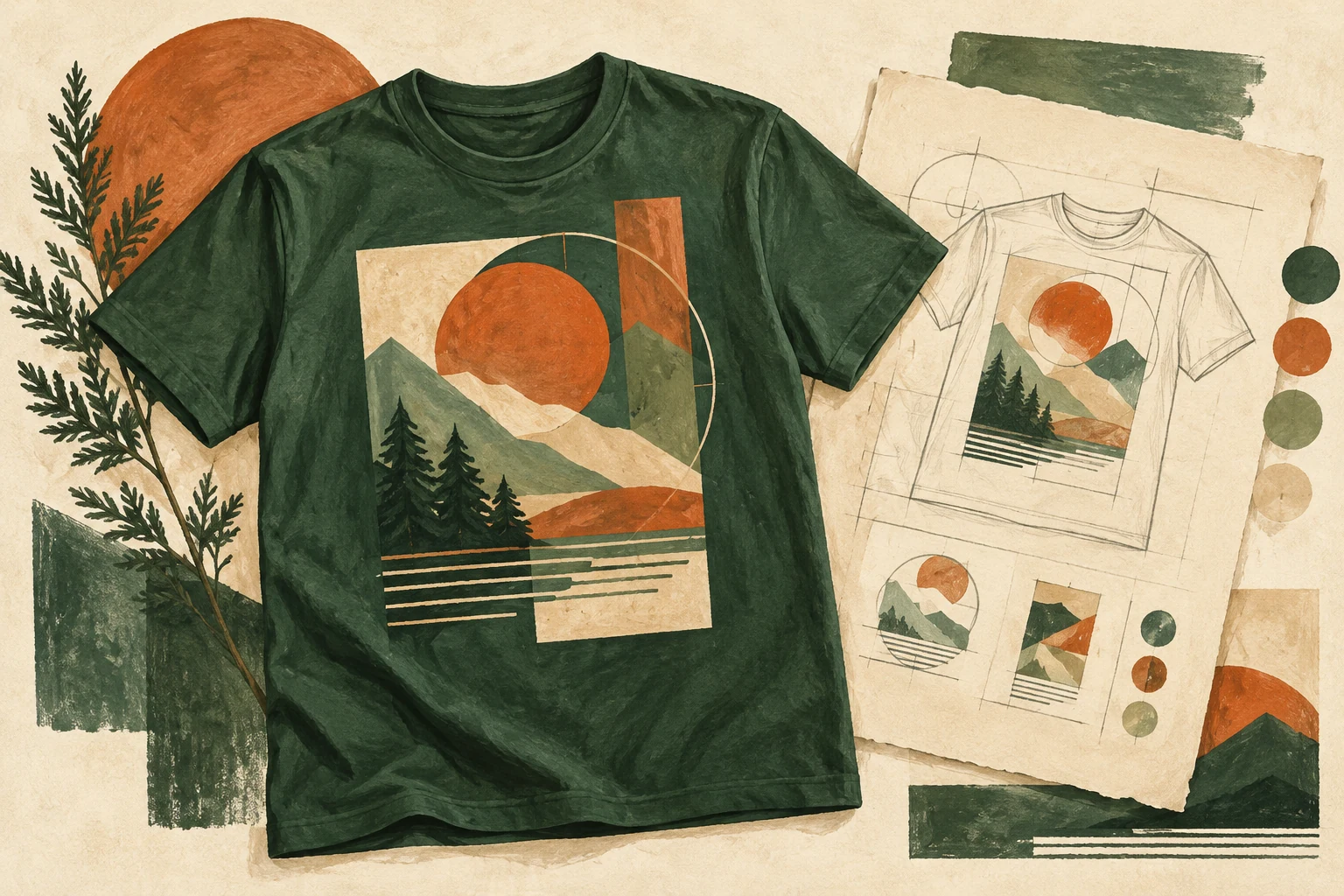 Illustration · not a product photograph
The appearance of a printed T-shirt depends on the relationship between the artwork and the garment—not just the design file alone. Use this guide to prepare a visual brief for Saira Fashions in Tirunelveli.
Choose the message and placement
Decide whether the main purpose is a recognisable logo, an event message or a decorative design. Mark the intended position: front, back or another placement to discuss with the team. Include approximate dimensions rather than asking for a design to be made simply “large”. Confirm whether different garment sizes need different artwork dimensions.
Consider the garment colour
A design that is clear on a white screen may be difficult to read on a dark or strongly coloured T-shirt. Share the preferred garment colour together with the artwork. Ask the team about available fabric colours and whether the proposed design needs adjustment for contrast.
Separate essential details from optional effects
List the spelling, logo proportions and other elements that must stay unchanged. Identify fine lettering or small details that need a legibility check. If you are using a company or organisation's artwork, obtain the necessary permission and approved file from its owner before submitting it.
Review before approving
Ask how the final design and placement will be confirmed before printing. Check names, dates, orientation and the number of print locations. Discuss the suitable technique with the team; do not assume that every effect can be reproduced on every fabric.
Request a current quote with your artwork, garment preference, sizes and quantity. Confirm any design-preparation costs and the production schedule before placing the order.